
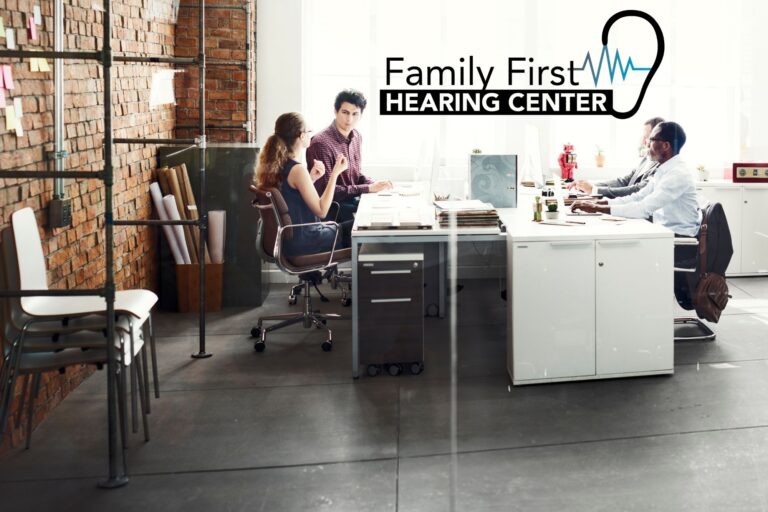

Hearing loss is more common than many people realize, especially among adults over 50. In the workplace, untreated hearing loss can quietly affect communication, confidence, and productivity. Missed information during meetings, difficulty following conversations, and increased listening fatigue can all impact job performance. The good news? With the right strategies and support, hearing loss does not have to limit your success at work.
How Hearing Loss Affects Job Performance
Work environments often include background noise, group discussions, and fast-paced communication—all of which can be challenging for someone with hearing loss. Common workplace challenges include:
- Difficulty understanding coworkers during meetings
- Struggling with phone calls or video conferences
- Increased fatigue from concentrating harder to hear
- Feeling overlooked or hesitant to participate
Addressing hearing challenges early can significantly improve confidence, communication, and overall job satisfaction.
Signs of Hearing Loss in the Workplace
Hearing loss often develops gradually, making it easy to overlook. Some common signs at work include:
- Frequently asking colleagues to repeat themselves
- Difficulty hearing in meetings or open-office environments
- Turning up the volume on phones or computers
- Feeling mentally drained after conversations
Many individuals report a noticeable improvement in productivity and comfort once their hearing concerns are properly identified and treated.
Practical Solutions for Managing Hearing Loss at Work
Hearing Technology and Assistive Devices
Modern hearing aids and assistive listening devices are designed to work in professional settings. Features such as directional microphones, noise reduction, and Bluetooth connectivity can significantly improve clarity during meetings, phone calls, and virtual conferences.
Workplace Accommodations
Simple adjustments can make a big difference, including:
- Using captioning for video meetings
- Reducing background noise when possible
- Incorporating visual cues or written follow-ups
- Improving room acoustics with sound-absorbing materials
These accommodations benefit not only individuals with hearing loss but also the entire workplace.
Communication Strategies
Clear communication is essential. Facing the speaker, speaking at a natural pace, and minimizing overlapping conversations can greatly improve understanding and collaboration.
The Importance of Open Communication at Work
Talking openly about hearing needs with employers and coworkers helps create a supportive work environment. Many employers are willing to make reasonable accommodations when they understand the situation. A culture of empathy and inclusion leads to better teamwork, morale, and productivity for everyone.
How Family First Hearing Center Supports Working Professionals
At Family First Hearing Center, we provide personalized hearing care solutions designed for real-world environments—including the workplace. Our services include:
- Comprehensive hearing evaluations
- Custom hearing aid fittings for professional settings
- Guidance on assistive listening devices
- Ongoing support and adjustments
Many of our patients report feeling more confident in meetings, more engaged with coworkers, and less fatigued throughout the workday after addressing their hearing needs.
Take the Next Step Toward Better Hearing at Work
If hearing loss is affecting your performance or confidence at work, help is available. Don’t let hearing challenges hold you back professionally.
Schedule a consultation with Family First Hearing Center today to explore personalized solutions that support your success at work and beyond.


